Understanding the Sequential Oral Sensory (SOS) Approach to Feeding
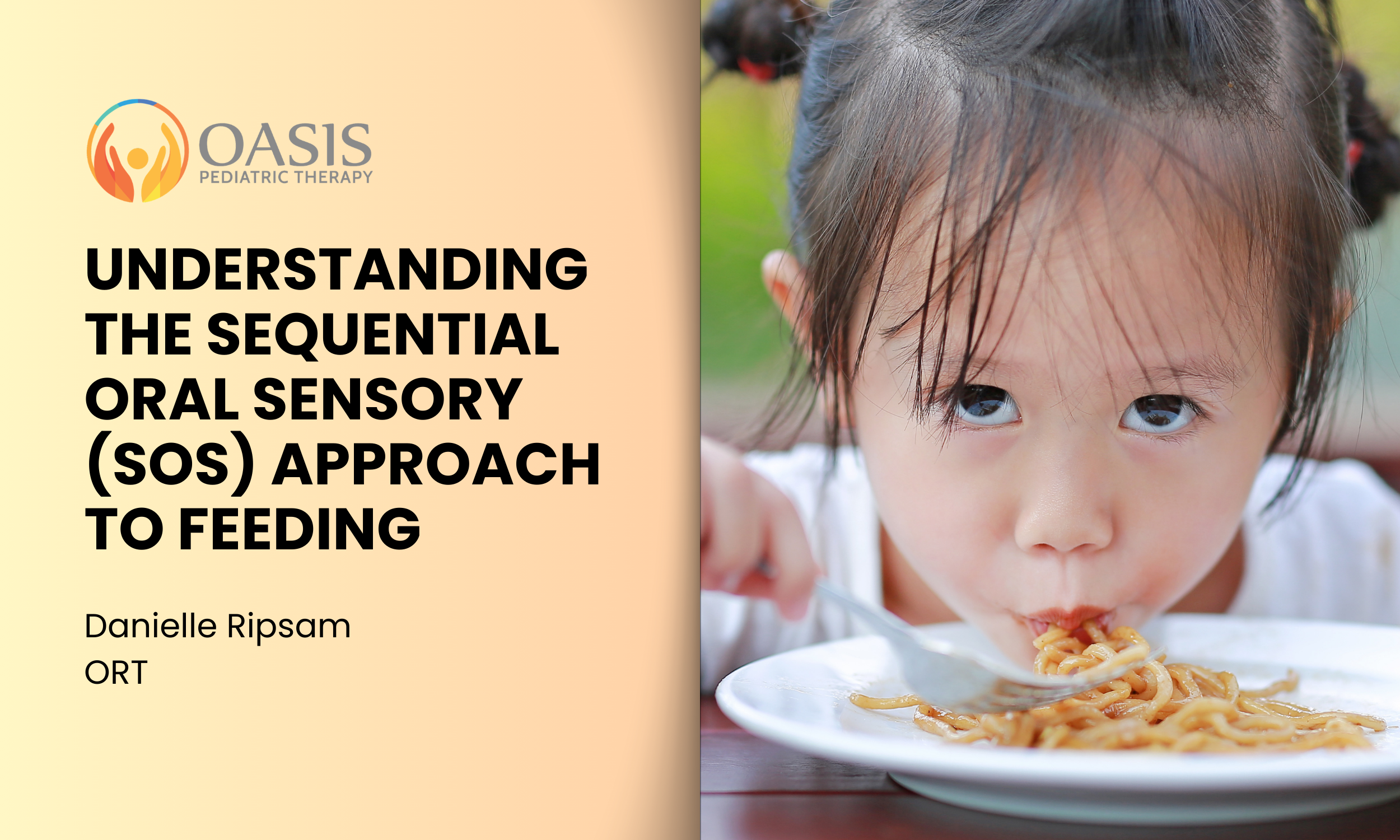
Mealtimes are a complex daily routine and can become a major stressor for many families. Children may struggle with sensory overwhelm, gagging, refusal, or extreme pickiness, which can impact their ability to participate during family meals.
As pediatric therapists, occupational therapists and speech therapists at OASIS Pediatric Therapy, we often meet families who feel stuck, overwhelmed or uncertain about how to support their child’s eating habits.
One of the most trusted, evidence-informed approaches we use in feeding therapy is the Sequential Oral Sensory (SOS) Approach to Feeding. This method is especially helpful for children who experience sensory-based feeding difficulties, oral motor challenges or anxiety around food.
Let’s explore what the SOS Approach is and how it supports children and families in building a healthy, positive relationship with food.
What Is the SOS Approach to Feeding?
The SOS Approach is a structured, play-based feeding therapy method developed by Dr. Kay Toomey. It is designed to help children become more comfortable with food by gradually increasing their interaction with it in a supportive, playful and pressure-free way.
Rather than focusing on “just taking a bite,” the SOS Approach recognizes that eating is a complex developmental process involving:
Sensory processing
Oral motor skills
Emotional regulation
Postural stability
Mealtime routines
Family dynamics
The SOS Approach meets children and families where they are and helps them progress step-by-step through a hierarchy of feeding skills.
The SOS Feeding Hierarchy: Steps Toward Eating
One of the most unique aspects of the SOS Approach is that it breaks eating down into manageable stages. A child does not have to jump straight from refusing food to chewing and swallowing. Instead, children move through a gradual progression such as:
1. Tolerating the food being nearby, this may include:
Being in the same room as the food
Sitting at the table while food is on the other side
Food being just outside of their space
Food being directly in their space
2. Interacting with the food through play, children may:
Assist with preparation or set-up
Stir the food with a utensil
Serve food onto a plate
Scoop or manipulate food with utensils
Use another food to interact (for example, dipping or stacking)
3. Smelling the food, progress may look like:
Odor being in the room
Odor at the table
Food being held in front of the child
Picking it up to smell
4. Touching the food, children may tolerate touch in stages such as:
One fingertip
Fingerpads
Whole hand
Arm or trunk/chest
Shoulder or top of head
Chin/cheek, nose, lips
Teeth or tip of the tongue
5. Tasting the food, this may include:
Licking lips or teeth
Full tongue lick
Bite and spit
Bite and hold for a certain number of seconds, then spit
Chew a certain number of times, then spit
6. Eating the food, eating may progress through:
Bite, chew/swallow, then spit some out
Chewing and swallowing independently
Each step is considered meaningful progress. For some children, it may take up to 32 individual steps from tolerating being in the same room as a new food to actually chewing and swallowing it.
For example, a child who previously cried when broccoli was on the plate may first learn to tolerate it nearby, then touch it with a finger and eventually bring it to their lips. It may take only a few steps, or it may take more than 30 small steps before consuming the food. These small wins build confidence and reduce fear around new foods.
What Therapists May Use SOS
The SOS Approach requires advanced training that therapists do not typically receive during undergraduate or graduate programs. Therapists who want to implement this approach must complete additional education and required coursework before using this approach in practice.
All therapists who have completed the official training are listed in the SOS Directory on the SOS Approach to Feeding website.
Who Can Benefit from the SOS Approach?
The SOS Approach to feeding therapy is often helpful for children who:
Are extremely picky eaters
Gag or vomit with certain textures
Refuse entire food groups
Have difficulty transitioning to solids
Experience sensory sensitivities
Have a history of reflux, prematurity or tube feeding
Show anxiety or distress during meals
Every child’s feeding journey is different and SOS allows therapy to be individualized to each child’s needs and developmental level.
What Does a Feeding Session Look Like with the SOS Approach?
These therapy sessions are often playful, engaging and child-led. Rather than forcing bites, we create opportunities for safe exploration and positive experiences with food.
A session might include:
Food play with a variety of textures
Sensory warm-up activities (swinging, deep pressure, heavy work)
Structured exposure to new foods
Modeling eating without pressure
Building comfort through routine and repetition
Educational resources for caregivers to implement strategies at home
Children may start by simply interacting with foods through tools, games or messy play. Over time, those interactions can lead to tasting and eating.
Supporting Families Through the Process
One of the most important parts of the SOS Approach to feeding therapy is caregiver education. Feeding challenges can feel isolating, but families are not alone.
We work closely with parents and caregivers to provide strategies that can be used at home, such as:
Reducing mealtime pressure
Offering consistent food exposure
Building balanced meals with “safe foods”
Encouraging exploration without forcing bites
Progress can take time, but the goal is always long-term success and a healthier relationship with food.
Final Thoughts
The SOS Approach to Feeding is a compassionate, research-informed method that helps children feel safe, confident and capable at mealtimes. As pediatric therapists, we believe every child deserves to enjoy eating without fear or stress and every family deserves support along the way.
If you have concerns about your child’s feeding development or picky eating, our therapy team is here to help!
Interested in Feeding Therapy?
If you’d like to learn more about feeding therapy or schedule an evaluation, please contact our clinic today. We would love to support your child’s feeding journey.